• courtesy: sagecanaday.com
    courtesy: sagecanaday.com


    First things:  I have created a facebook page for the blog.  Please click “Like.”  Thanks!


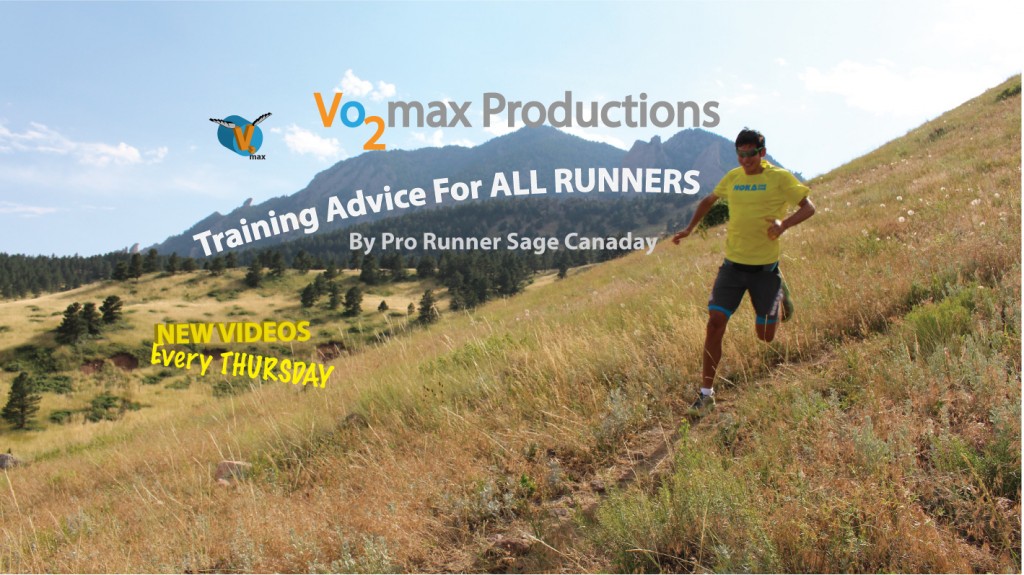
    Sage Canady has an awesome story.  He ran college at Cornell, joined the Hansons-Brooks distance team and qualified for the Olympic Trials a couple of times.  From 2009 to 2012, he ran road races under the Brooks-Hansons banner.  But in 2012 he went off-road and never looked back. Where he struggled to find his place and identity as a member of the Brooks-Hansons team (read his excellent book!) he came into his own as a MUT (mountain-ultra-trail) runner.  He has won several HUGE trail races, including Tarawera, White River 50, Pike’s Peak Ascent, and the very muddy The North Face Endurance Challenge this past weekend at the Marin Headlands.

    What I love about Sage is that he left a pretty good gig at Hansons-Brooks to find HIS joy in running.  It would’ve been easy to settle in there for the long haul, but he took a chance on himself, pursued his passion, and achieved greater things after taking a personal and professional risk than I think he might have otherwise.

    He is a Hoka athlete and the publisher of great training videos and coaching at VO2Max Productions. His website is SageCanaday.com.

    Here is a five questions interview we did earlier this summer.

    1) You are one of several top ultra runners who have joined the Hoka movement.  How did that happen for you?  Did you have a transition period going from the more traditional shoe to the Hokas?
    HOKA had approached me near the end of my contract with another shoe company. Honestly, I was a bit skeptical of HOKA shoes at first, but then I learned that they were coming out with new, lightweight and low-drop shoes that still had a lot of cushioning. Everyone I met in the company was really supportive of the growth in the sport and there were a lot of hardcore “running geeks” that I found I could really click with! The transition period was very short. Maybe a week at the most. There are lots of different models of HOKAs and some I definitely like more than others.
    2) You are vegetarian.  And you’ve done a lot of research on fueling strategy (fat burning vs carbs, etc.).  Tell me, do you still get the protein question [“where do you get your protein?”] even with all your success?  And what do you say?
    I was born and raised as a vegetarian and so I’ve lived that way for the last 28 years. That is normal to me. Before I started Mountain-Ultra-Trail running I didn’t watch my sugar intake as much and I didn’t eat nearly as healthy as (I think) I do now. Living with my gluten-free vegetarian girlfriend (Sandi Nypaver) helps. I still have a lot to learn with the science of fueling for long-distance running, but in general I think a healthy lifestyle goes hand-in-hand with running well and having this kind of diet. It’s exciting to see how science can be applied to the sport!
    3) You coach yourself, correct? Was there an adjustment period going from the hyper-scheduled Hansons Team to being your own boss?  Who do you look for when you need a kick in the pants?  
    I’ve coached myself since early 2012 leading into my first ultra. After being in a very structured environment in college and then at Hansons I was looking for a refreshing change of pace (pun intended). The adjustment was pretty much instant and a huge relief. There is certainly a huge benefit to having a coach to work with and having a training group to drag you along, but I thoroughly enjoy doing things solo. My girlfriend Sandi is there to bounce some ideas off of (she helps me with our coaching business at Vo2max Productions), but the main kick in the pants is from within. I look at results online or read things about other top runners and it gets the competitive juices flowing. If I fail and make a mistake like overtraining myself (ie UROC) I only have myself to blame and I like making only myself accountable for that. On the flip-side, if I do well it’s a huge confidence booster!
    4) Other than your now-famous uphill tempo run, what’s a nugget of training advice you can share with those of us striving for a little improvement on road or trail?
    I learned this mainly from my college coach Robert Johnson at Cornell: Take your easy days easy. I think too often us runners are too motivated to try to improve everyday and we go out and push, push, push. On any easy/recovery day between workouts I make sure to run relaxed and not care if I’m getting passed (in Boulder that can easily happen). If you don’t recover well enough you don’t absorb the hard workouts well, you risk injury, and you risk overtraining. It’s all about staying healthy so you can be consistent in the long-term.
    Here Sage explains the uphill tempo run:
    5) Your YouTube channel, VO2MaxProductions, is incredibly rich with information and advice.  Do you find that putting so much of yourself and your training “out there” inspires you to work harder?  We rarely get this much insight or access into the training of pros and it is quite refreshing. 
    Thanks! Glad you like the YouTube videos on Vo2max Productions. I’m inspired by how many views, subscriptions and comments the channel gets. I think it’s a good indicator of the good-will of the running community and to share in that is a rewarding endeavor. I use it as a way to (hopefully) “give back” in some small way to the sport and people that have given me so much. I believe that information on how to enjoy the sport more, improve, and stay healthy should be out there for everyone. Social media is a valuable platform that I use to connect to other runners. I think I’m addicted!


  • IMG_6601

    An Open Letter to Clif Bar

    Dear Clif Bar,

    Recently I read that you dismissed 5 longtime athlete employees for undertaking risky behavior in their outdoor endeavors. I understand all sides here. I get it. You can’t condone climbers taking deadly risks while they can’t stop being the climbers that made them renown. This is the price of doing business.

    I love your products and I dig the spirit behind your company. So I’ve been thinking about how you’ll replace those positions. You no doubt are well on your way to selecting a few more elite and high-profile athletes to fill these open slots. You are searching and asking who will be given the opportunity to hold the Clif bar banner high as they undertake awe-inspiring adventures on mountains and trails? Great question. I’d like to suggest and answer.

    Try something a little different. I know you have an ambassador program. And that’s great. They’ve represented Clif Bar well.  But instead of hiring a few more high-profile elite athletes or adding to a brand ambassador program, select a few people who’ve overcome the odds to fight trough personal tragedy, who’ve conquered weight or bad health to reshape themselves into healthy humans. Don’t pay them. Instead sponsor their active life for a year.  Give them gear, give them fuel, and give them a place on your website.  Help them find a goal to pursue, assist them in getting there, send them Clif product, and show the world that all it takes to reshape or reclaim your life is one step on a run, one pedal of a bike, one climb up a mountain.

    Sponsor the everyman or everywoman. This is more than an ambassador program. This is a chance to show the public that Clif Bar celebrates and supports all athletes, big or small, short or tall, Age Group winners or those of us who bring up the middle and rear of races. Clif Bar products sustain us as we pursue personal goals that may not impress the pro athletes under your care, but make sons and daughters proud of their mom or dad who rises each morning to improve their health, to reach for a dream, and to earn a few more healthy years on this Earth to spend with friends and family and to find inspiration and adventure

    This is my appeal to you.

    Sincerely,

    a fan,

    Gordon Harvey

    @thisrunninglife
    http://thisrunninglife.net

  • IMG_5532

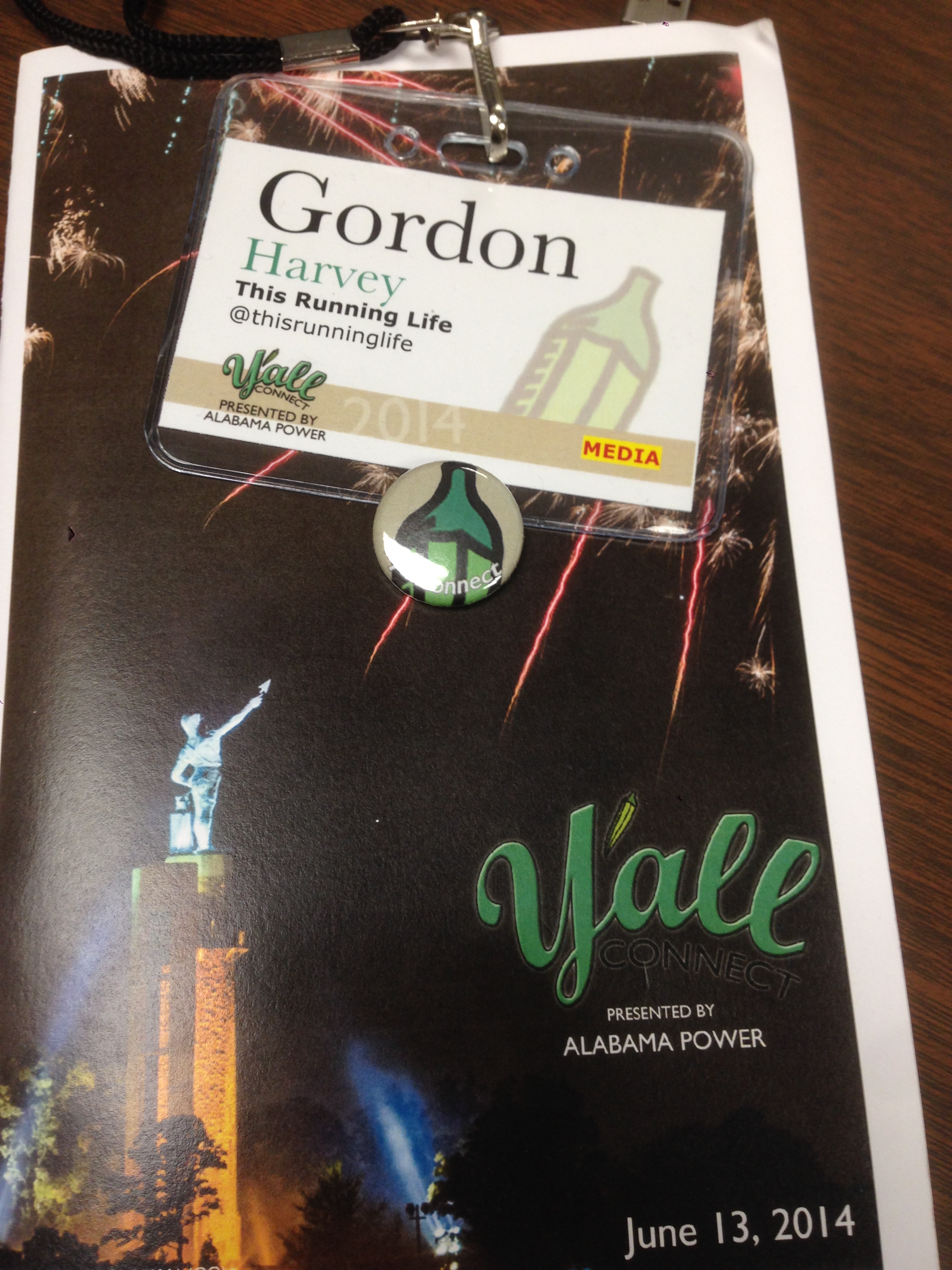
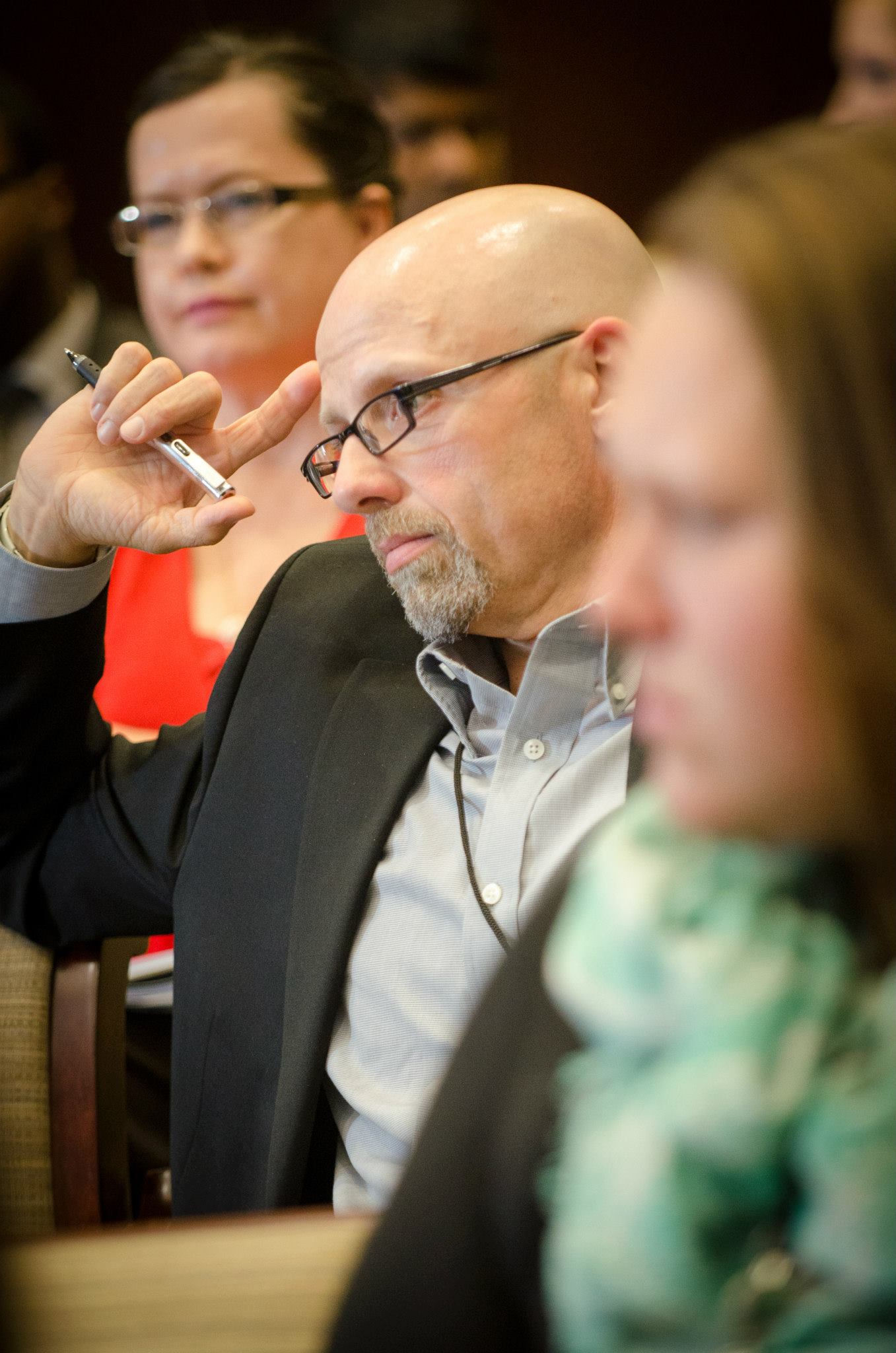
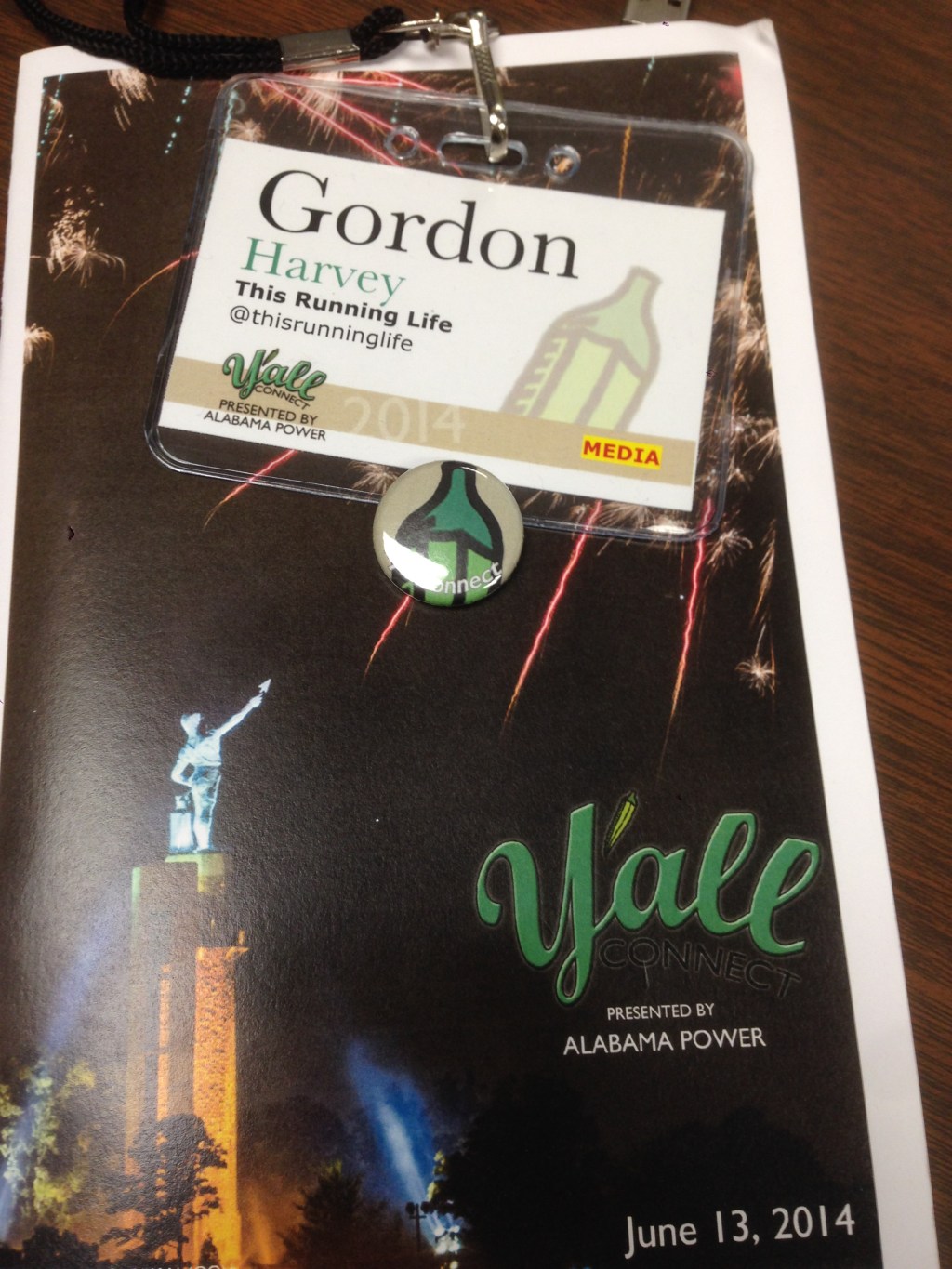
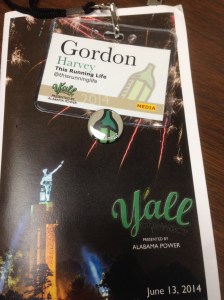
    There’s a room full of people at the main ballroom at the Harbert Center in Birmingham, Alabama on a warm June Friday morning and I’m more than a little intimidated. Professionals with a clue mingled with each other and ate from the breakfast buffet in advance of the opening session of the 2014 version of Y’All Connect, a social media, digital storytelling, and networing conference that was the brain child of Wade Kwon. In its second iteration, Y’all Connect has become the place to meet and network with Birmingham’s social media royalty and to learn a thing or two from some of the country’s biggest social media and digital storytelling gurus.  This was, perhaps, a gathering of the most connected people in the Birmingam social media/blogging scene. The average age couldn’t have been more than 38.  At 47, I feel like their dad.

    I feel like a poser. I’ve convinced Wade to grant me media credentials in order to explore this strange new world. Sure, I have a blog, I was podcasting when podcasting was in its earliest years, and I’ve been on Twitter since 2008. Beyond that I hadn’t a clue about the world of social media professionals and how they do their jobs, much less those who travel the country speaking to them.

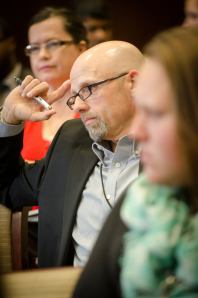
    I’m dressed in my hippest, quasi professional, casual-hipster outfit of Jeans, black shoes, black sportcoat with an open collar shirt. Wielding a moleskine, no less, I sauntered into the room and found a safe spot way in the back. From that vantage point, I could observe the room, stay out of harms way should I be discovered as a digital pretender, and soak up the atmosphere of a conference of something other than college professors in navy blazers. Two men who shared a table with me confessed that they always sat in the back, “we’re Baptists.” One young woman, fresh out of college told me she was there on her own dime as a blogger, but hoped that her boss would pay for the conference fee if she returned with useful information for the company.  Her enterprising attitude was a far cry from the stereotypical (unfair, I might add) self-centered slacker millennial that so many older people complain about.

    For my generation, the elders of Generation X, social media came late to our lives. We’ve dominated facebook and twitter, but have we used them in the most effective way possible? Much of this conference was about just that. How do you not only manage a company’s social media presence without creating problems or enbarrassment, but also use social media as a valuable source of data about followers, consumers, and yourself? How  do you effectively tell your story while also building a bond with your fans and customers? If your company doesn’t have a sound strategy for presenting yourself digitally that reflects the way people access social media or websites, then you do yourself a disservice. For example, consumers ever increasingly acccess websites and portals wth their smart phones and less so with laptops or desktop computers. If your digital presence isn’t set up for mobile optimization then you make it harder for them to find the information or product that you want them to locate.  Have you ever tried to register for a newsletter from a company or buy a product using your phone on a website that wasn’t set up for that screen size?  Pinching and resizing and pulling the page left and right, up and down.  It’s enough to make you want to not buy from the brand.
    IMG_5564

    Do you use or search hashtags? Why not? It is the easiest way to locate those who share your interests or to locate customers and clients. Until this conference, I had no idea that twitter has a search page. Do you see what more successful blogs or companies are doing with their online presence? Do you adopt those best practices? How do you even determine what those practices are? Are you a blogger who is trying to find your niche while not losing the passion that led you to write your digital stories in the first place? This was the conference for you.

    It seems that social media strategy isn’t that difficult to do well if you pay attention to audience, don’t get lazy with your content, and remain aware of best practices and horrible mistakes of those who came before you Remember: what you find humorous may fall flat and backfire once presented to the public. (Amirite Dave and Busters?  Good news.  You’re not alone.)

    Whether a small personal blogger, a college professor, or a large multi-national company, social media strategy has to reflect the passion of the person or entity it represents. What is your passion? Share with the follower the passion and value that you got from whatever it is you write about, whether publicly held power company or a fitness blogger with a mac. I half-listened to the presentations because I was so consumed with watching the people in the room.  Everyone seemed hungry for an edge to make their blog or company just a little better, more effective,  more valuable to readers and consumers.  I left with 8 pages of notes, a handful of new contacts and friends, and a renewed zeal for presenting my digital story.

    I was struck by the image of the young woman next to me wearing a cool knit cap with monkey face on it that she received as a door prize from one of the meeting’s sponsors, Mailchimp (mental note: find some way to get one of those awesome caps!).  She  typed furiously on her laptop, taking in all the information she could, excited about expanding her brand or growing her blog.  I wanted to ask her what she did and why she was there, but I dared not interrupt her typing.  She was enraptured by the information and how she could make her dreams a reality.  She couldn’t get the information fast enough.  There’s nothing more fun to watch than passion as it was being nourished.  This is why I’ll go back next year.

    Follow Wade on Twitter

    Follow Y’all Connect on Twitter

    Y’all Connect Facebook page

    Search the Y’all Connect hashtag: #yallconnect

  • 1416968328022


    I’ve done a lot over the past few weeks.  Starting in late September, I raced the Birmingham Stage Race, hopped a plane and ran a half marathon in California, returned and two weeks later ran the Crusher Ridge 42K, then less than a week later I paced a friend at the Pinhoti 100, running with her for 30 miles through the dark and cold overnight hours. I was good to rest and recover in the days between each event, but the 30 miles along the Pinhoti turned out to be a lot of power hiking up hills and mountains using some muscles that as a runner I don’t often engage.

    I figured it was time for me to do a little preventative medicine when it came to my running health.  I’m 47, so my powers of recovery don’t engage was quickly as they did just 5 years ago.  If Im going to pull off the goals I have for the next year, then it is time to be less reactive about my running infrastructure.

    I met Sloan Beard at mile 68 of the Pinhoti 100 at 2 a.m. on Sunday morning.  My 30 mile pacer duty had just ended and I was eating from the aid station table that she had manned.  I saw her fleece with a “F.A.R.M.” logo and asked if she worked there. “I own it,” she giggled.  So what exactly WAS the FARM?  I’d seen their tent at trail events in Birmingham and I knew a couple of runners they sponsored.  But in my imagination the FARM was some sort of agricultural collective replete with cows ad pigs. No, Sloan explained, Functional and Rehabilitative Medicine was their business, not livestock or crops.  They did chiro work, but also stressed whole body functional analysis.

    After a week’s rest following Pinhoti, I went out on a warm Saturday morning for a one-hour run.  Near the end of the run, my soleus and the area behind my knee became irritated.  It was odd.  I hadn’t felt this all week.  Did Pinhoti do this?  Was it the sheer volume of the past month or something else entirely?  I called the FARM and made an appointment to get checked out and to establish a relationship for the future.  My body needs a mechanic who can spot problems before they become problems, not merely fix me after I break.

    Sloan’s husband Beau is my new mechanic.  Before he examined my knee issue, he put me through a battery of balance and strength tests and discovered that my left side, specifically the hip, is weak and has ben throwing me off balance which has resulted in my issue, which is, not surprisingly, in the left leg.  ‘ve got a battery of exercises to balance and strengthen my hips and even out my balance.

    The cool thing about Beau is he is all about continuing running and movement even in the rehab phase, as long as damage is not being extended.  Be smart but stay active.  It is refreshing to have a doc whose first reaction to injury is not to cease all activity.  He gets runners and understands our peculiar addictions and needs. And that’s a good thing.

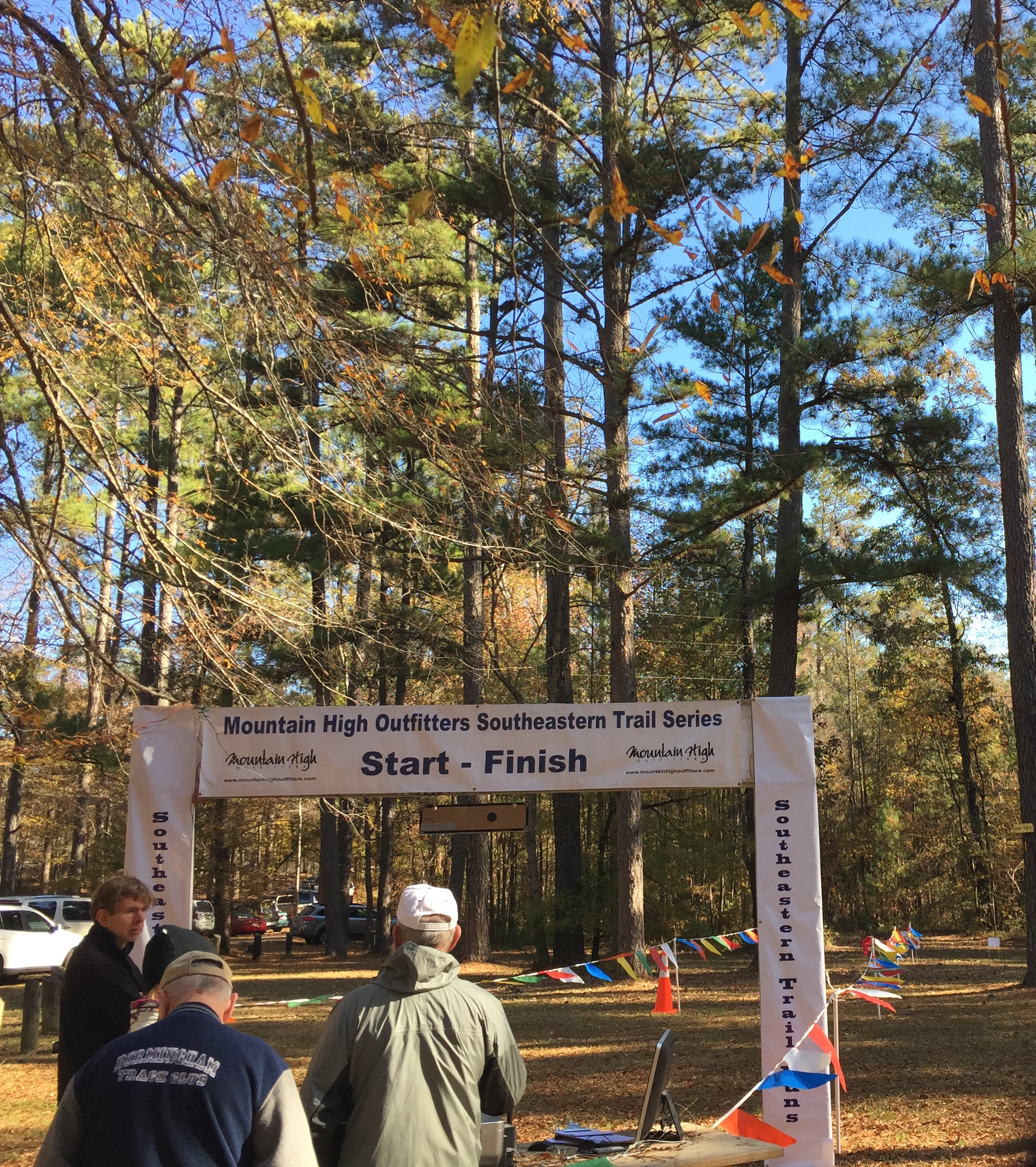
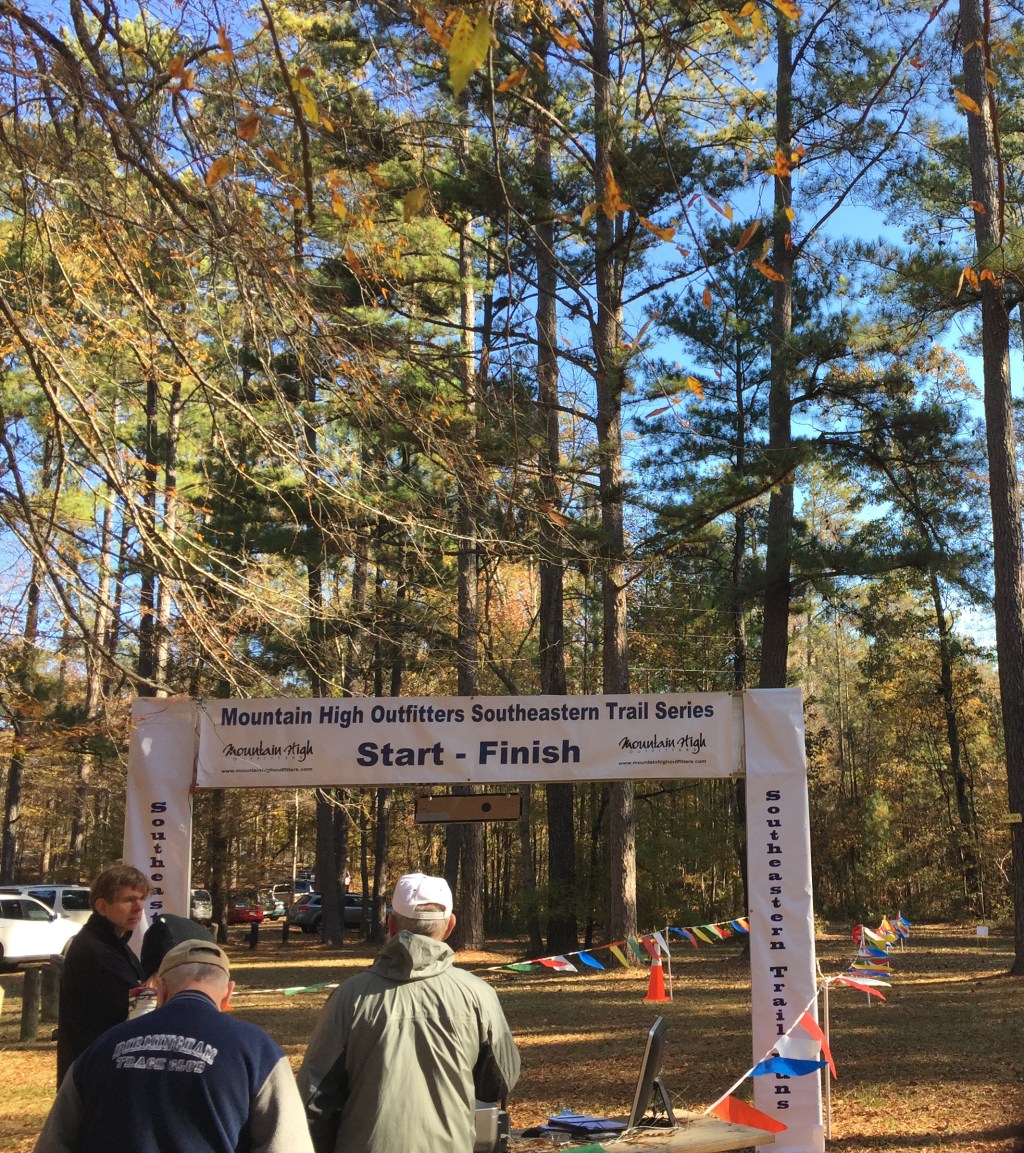
  • Perfect day for a trail run
    Perfect day for a trail run

    My dad taught me to always finish what I start.  When I was  8 and played pee wee football my team was undefeated.  The Center Point Rams lost two games in the team’s existence as it moved through the weight classes of youth football in the 1970s.  From 75 pounds to 125 pounds, the Rams were a force to be reckoned with.  It was a special group of boys who would later become the core of the local high school football team.   We were coached by men who meant well, but who demeaned us, berated us, mocked us, and made us cry.  They  made youth football an experience I feared and loathed.  This was the 1970s.  Society endorsed and accepted that type of coaching abuse.  Like denying water to athletes on a hot day, breaking a kid emotionally and physically in pursuit of a plastic trophy was the norm.  I’m not sure what I’d say to those coaches if I saw them today.  I want to ask them why it was important to shame little kids until they cried.  I want to ask if they ever wondered whether making 8 year olds cry on a daily basis was necessary and worthwhile.   Did it make them feel powerful? I’d ask them why we had to hate football in order to be “winners.”

    In tears, I told my dad I wanted to quit.  I feared practice like a soldier headed into a hopeless battle. He told me he understood but that I had to finish the season. I had to finish what I started.  I made a commitment and it was my responsibility to follow through.  If I wanted to quit after the season he would support me fully.  But I couldn’t walk away until my commitment had ended.  I never went back to youth sports.  I left athletics altogether for the next 7 years and grew obese and unhealthy.

    Fast forward to my freshman year in college.  College algebra and I refused to get along.  I hated math and it tormented me with equations and formulae.  Through midterm I had accumulated a 24 average (out of 100, to be clear).  I was clueless about college.  I didn’t know you could withdraw from classes.  I had no clue.  Dad taught me to finish what I started.  I did.  I took all the tests, I attended all the classes.  I failed the course.

    Quitting makes me feel like a failure.  And fortunately, I’ve never had to quit a race because of injury.  Don’t get me wrong, there have been races where I WANTED to quit.  During the darkest moments of some marathons I found myself fantasizing about stopping.  Right there.  Right that moment. I fantasized about knocking some kid off his bike and pedaling back to the hotel for a shower and coffee.  About walking out of the race and manning a water station.  About getting a cab or a ride back home.  I dreamt about sitting down.  Just walking off the course and grabbing a beer.  But I’ve never been able to do it.  I’ve never HAD to quit.  Until now.

    The decision came easier than expected.  I was just past 6.5 miles of the lake Tranquility 25 K.  Originally registered for the 50K, I decided to pull back to 25K since I was battling some soreness behind my knee that cropped up after a rest week following my pacing experience at Pinhoti 100 (I’m still writing about that, so this all seems out-of-order but it’ll clear up soon).  The first 6 miles felt great.  I felt peppy.  A cool fall morning greeted us as we started the race.   I planned to push myself on the downhills and flats and walk/jog the climbs.  For the first time in a while, I really wanted to run. I was excited to run. I needed to run.

    The early miles were quick and mellow.  I chatted with Brooke Smith Weaver, a local TV news personality (I didn’t know it was her at the time).  She was attempting her first ultra (and she finished, too.  WTG Brooke!) and we ran together along a flat section of the trail chatting about the different approaches to running road marathons and trail ultras.  I felt better than I had in a long time.  This was going to be a great day.

    Just after mile 6 I stopped to get a gel out of my handheld and started back up a mild climb when I felt it.  That pre-cramp kind of tightening you get in your calf.  You know the feeling.  It’s a tight, knotty sensation.  I thought that I was either about to pull a muscle or cramp like crazy.  So I stopped and kneaded it with my knuckles and tried to run again.  I couldn’t extend my leg to stride.  I tried to run short-legged for a bit (Imagine  Weeble trying to run up a hill) but realized I was going to really mess things up if I ran like Igor for another 9 miles.  I limped like Fred Sanford a quarter-mile to the aid station and hitched a ride back to the finish.  My day was over.

    I’m in my 7th year as a runner. The greatest lesson I’ve learned in this time is the value in seeing the big picture, the longue dureé. This is the greatest “skill” a runner can develop. We will get hurt.  We will have suboptimal training and races.  We will become disheartened.  But we need to see the long view.  This too shall pass.  And a day will come when we can run again, like kids, and smile at what we do.  I get it now.  Stepping away from running for a week or two to recover properly is so much better than pushing through and making an injury worse than it should be.

    When we were beginner runners, the loss of any day of running felt like a tragedy, a national emergency.  For me, not being able to run adds a layer of anxiety. Running helped me to lose weight.  It helps me maintain my weight loss and not having it sends chills down my spine that I’ll gain back every ounce I lost.  But with ever running birthday I enjoy and as I internalize the wisdom from friends and veteran runners, I know that I won’t gain back all that weight.  I won’t lose all my fitness.  I won’t look like Fat Albert if i miss a week of running.  I can see the big picture.  I have a sense of the longue durée.

    This isn’t to say that each day I don’t assess the injury.  Or obsessively probe the affected muscle.  I evaluate the way it feels today compared to yesterday.  My mind is consumed with every step I take.  But I don’t test it.  I don’t go for a test run.  I don’t rush myself back.  I know more now.  I get it.

    Bertrand Russell once said “In all affairs it’s a healthy thing now and then to hang a question mark on the things you have long taken for granted.”  This DNF is a gift.  I needed a little perspective.  My running year has been so abnormal. From surgery to the long recovery road to never feeling fully “back” from it all, I’ve struggled with the reality of where I am and the memory of what I used to be as a runner.  I’ll be back.  But it takes time and patience and some hard work.  This fortunate misfortune allows me to step back and appreciate what I have and what I am and what I will be again.


  • You’ve likely seen this report about the women’s winner at Chickamauga this past weekend being DQd because her finish time was a virtual impossibility given her 13.1 split.  Read here and let me know what you think.

    This was my third marathon in 2010,  It is 2 loops around the Chickamauga Battlefield park, on a partially closed course with lots of opportunities to manipulate your time.  This is a small race with not a lot of course marshaling, or timing mats.

    Battlefield Marathon Winner Disqualified

    Another article is here

  • I’ve put together a Running Shoe Brand Tag survey.  I got the idea after listening to a design podcast that discussed the development of brands, names, logos, and other things vital to creating a marketable product identity.  I thought it would be fun to do a survey about Running Shoe Brands.


    Open the survey and enter the word(s) that you’d use to best describe the brand listed.  Thanks.  I’ll crunch the results and report here what I find


    Thanks


    Running Shoe Brand Tag Survey

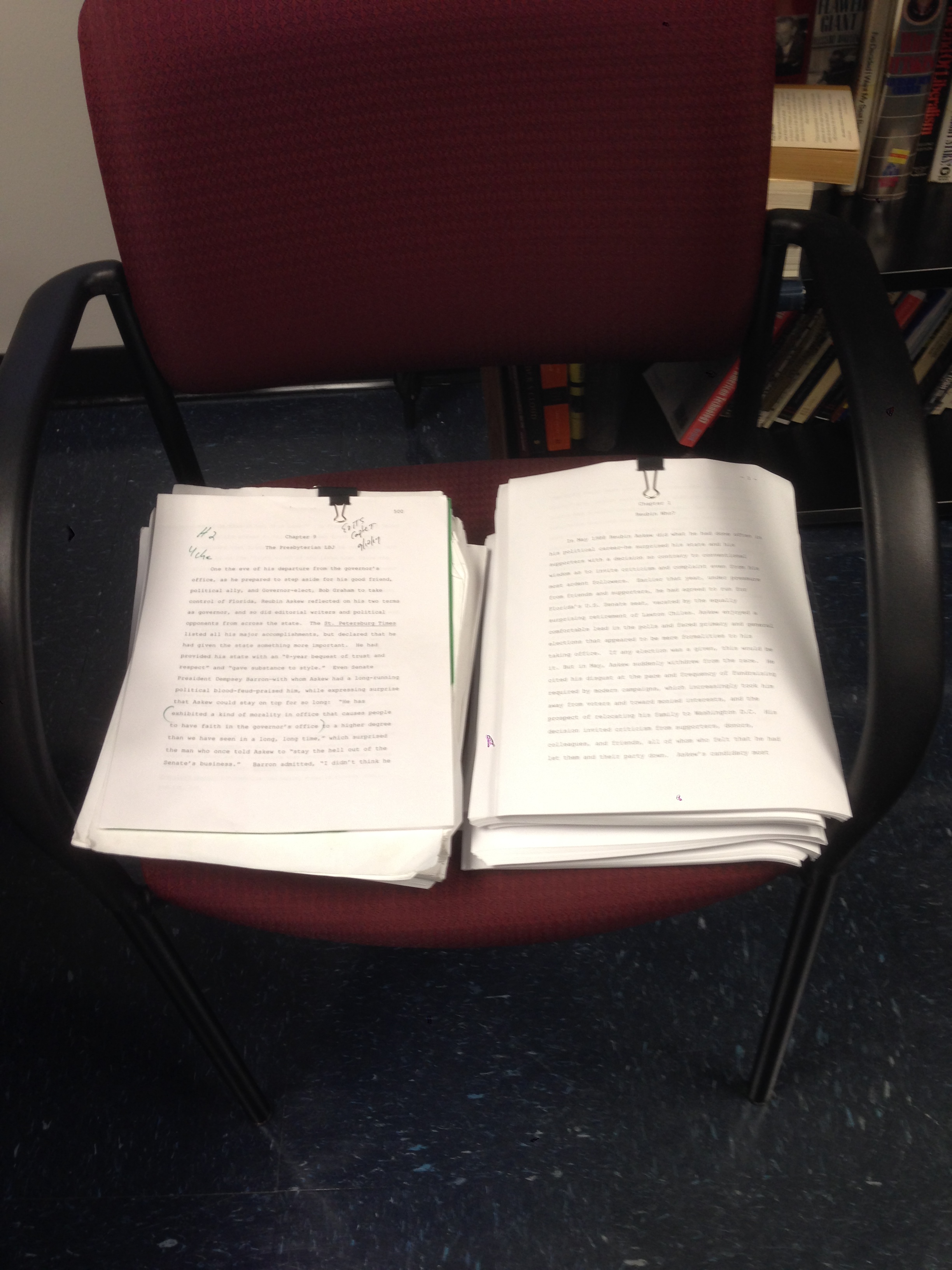
  • The book manuscript ready to go out
    The book manuscript ready to go out


    Took a couple of months off from this site to finish and revise a book manuscript (for my academic life) that had been languishing for several years after I became a Department Head.  I’ve submitted it to the press, secured a cover image, and acquired various rights and permission to use some formerly published work of mine. Now I can return to doing this fun thing.


    I’ve run several races, got bit by something that required antibiotics, and have a couple of products to review.  I’ll catch up soon.